Introduction
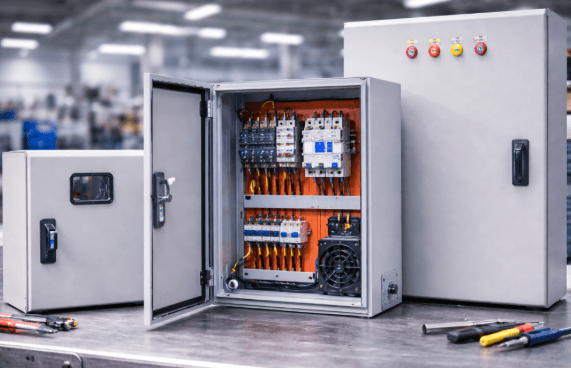
Modern industrial facilities depend on electrical and electronic equipment to manage production, automate processes, and maintain communication between machines. These systems are often installed inside protective enclosures that shield sensitive components from dust, moisture, accidental contact, and other environmental hazards. However, enclosing electrical equipment creates another challenge: heat management.
Controllers, variable frequency drives, power supplies, relays, and communication devices generate heat during normal operation. When this heat accumulates, internal temperatures can rise beyond recommended limits, affecting performance and potentially shortening equipment life. High ambient temperatures, direct sunlight, and demanding operating schedules can make the problem more serious.
Maintaining suitable temperatures requires a cooling strategy that reflects the enclosure’s design and operating environment. By understanding heat loads, cooling technologies, and installation requirements, businesses can protect essential equipment and reduce the risk of temperature-related interruptions.
Why Industrial Enclosures Need Temperature Control
Electrical enclosures are designed primarily to protect equipment, but their protective construction can restrict natural heat dissipation. A cabinet containing several electrical components may accumulate heat faster than it can release it into the surrounding environment.
The consequences depend on the equipment involved and the severity of the temperature increase. Some electronic components become less reliable when operated outside their recommended temperature range. Other devices may reduce performance, trigger protective shutdowns, or experience accelerated aging.
Temperature control is particularly important in facilities where production operates around the clock. An unexpected shutdown can affect production schedules, increase troubleshooting costs, and place additional pressure on maintenance teams.
Environmental conditions also matter. A cabinet installed in a cool indoor room faces different challenges from one positioned near a furnace, exposed to sunlight, or installed outdoors. The cooling design must account for both the heat produced internally and the heat entering from outside.
Understanding Different Cooling Technologies
Natural Heat Dissipation
Some enclosures can release sufficient heat through their surfaces without requiring dedicated cooling equipment. This approach may be practical when the internal heat load is low and the surrounding environment remains relatively cool.
Natural heat dissipation has the advantage of simplicity because it requires no additional cooling machinery. However, its effectiveness depends on cabinet construction, surface area, ambient temperature, and internal component placement.
When the temperature difference between the enclosure and the surrounding air is small, heat transfer may be limited. Facilities should therefore confirm that passive cooling can handle the expected load rather than assuming that a metal cabinet will automatically remain cool.
Fan-Based Ventilation
Ventilation systems use fans to move air through or around an enclosure. When external air is clean and sufficiently cool, this method can help remove excess heat at a relatively modest operating cost.
Filters may be used to reduce the entry of airborne particles. However, filters can become obstructed over time, reducing airflow and making regular maintenance necessary.
Fan-based cooling is not appropriate for every environment. If the surrounding air is hotter than the required internal temperature, introducing more of it may fail to solve the problem. Ventilation can also be unsuitable when the enclosure must maintain a high level of protection against dust or moisture.
Heat Exchangers
Heat exchangers transfer heat between separate air circuits or between different media. In industrial enclosures, air-to-air heat exchangers can help remove heat while keeping internal cabinet air separate from external air.
This separation can be useful in dusty or contaminated environments. Nevertheless, performance depends on the temperature difference between the two sides and the capacity of the heat exchanger.
When the external environment is extremely hot, a heat exchanger may not achieve the desired internal temperature. The operating conditions and required temperature range should be evaluated before this technology is selected.
See also: Crypto Tax Basics for Businesses
Refrigeration-Based Cooling
Refrigeration-based cooling actively removes heat from the enclosure and transfers it to the surrounding environment. Unlike simple ventilation, it can cool the internal air below the ambient temperature, provided the equipment operates within its specified limits.
A dedicated enclosure air conditioner may be appropriate when cabinets contain heat-sensitive electronics, operate in hot surroundings, or require separation between internal and external air.
The correct unit depends on the total heat load, ambient temperature, cabinet construction, and required internal conditions. Capacity ratings should be reviewed alongside operating limits, power requirements, and installation specifications.
How to Select the Right Cooling Capacity
Selecting a cooling unit begins with a realistic assessment of the heat that must be removed. Choosing a unit that is too small can leave equipment exposed to excessive temperatures, while unnecessary oversizing may increase initial and operating costs.
Calculate the Internal Heat Load
Identify the components installed inside the enclosure and determine how much heat they release during operation. Manufacturer specifications and equipment loss figures can help establish a reliable estimate.
Devices such as variable frequency drives, transformers, power supplies, and power electronics may contribute significantly to the overall load. Their heat generation can vary with operating conditions, so estimates should reflect realistic production demands.
Where equipment operates intermittently, the design should consider both normal operation and periods when several components are active simultaneously.
Evaluate External Heat Gain
Heat may enter through enclosure walls, doors, and other surfaces. Direct sunlight can add considerable thermal stress to outdoor installations, while nearby machinery may raise the temperature of the surrounding air.
Cabinet material, surface finish, insulation, mounting location, and exposure conditions all influence heat transfer. These factors should be included in the cooling assessment rather than relying solely on the heat generated by internal components.
Establish the Required Temperature Range
The target temperature should be based on the operating requirements of the installed equipment. If several components have different temperature limits, the design must account for the most restrictive requirements.
Maintaining a suitable temperature range is more important than simply setting the cooling equipment to its lowest possible setting. Excessive cooling may waste energy and can create condensation risks under certain conditions.
Consider Peak Ambient Conditions
Cooling capacity can vary with the temperature of the surrounding environment. A unit that performs well in mild conditions may provide less effective cooling during a heatwave or in a hot industrial setting.
Review performance specifications for the expected ambient temperature, especially when the cabinet is installed outdoors or near heat-producing machinery. This approach helps reduce the risk of selecting equipment that cannot maintain the target temperature during demanding periods.
Applications Across Industrial Environments
Manufacturing and Automation
Production lines rely on control cabinets to coordinate motors, sensors, programmable logic controllers, and automated machinery. Excessive heat can affect the reliability of these components and contribute to unexpected interruptions.
Thermal management is particularly important in compact cabinets with high equipment density. A suitable cooling solution helps maintain operating conditions while supporting stable production.
Outdoor Electrical Installations
Outdoor enclosures face changing weather, direct sunlight, and seasonal temperature variations. Depending on the location, they may also encounter dust, humidity, and airborne contaminants.
Cooling equipment for these installations should be selected with environmental protection and operating limits in mind. Appropriate mounting, sealing, and weather-resistant construction can help preserve the enclosure’s protective function.
Energy and Power Systems
Electrical cabinets used in power distribution and energy infrastructure may contain components that produce substantial heat. Their reliability is important because equipment failures can affect connected systems and require costly maintenance.
The cooling arrangement should be selected according to the electrical load, environmental conditions, and applicable engineering requirements. Temperature monitoring can provide additional visibility into cabinet conditions.
Telecommunications and Network Cabinets
Communication equipment generates heat while processing data and maintaining network connections. Outdoor telecommunications cabinets can be particularly challenging because they may operate in exposed locations with limited access for maintenance.
A well-designed cooling arrangement helps protect network devices and power systems from excessive temperatures. Remote monitoring can also help operators identify abnormal conditions before they affect service.
Industrial Process Facilities
Food processing, water treatment, chemical production, and other industrial operations use control enclosures to manage machinery and process equipment. The surrounding environment may contain moisture, dust, or substances that require special protective measures.
Cooling technology must be compatible with these conditions. Equipment selection should consider the required enclosure protection, cleaning practices, ambient temperature, and access available for servicing.
Installation Factors That Affect Performance
Even a correctly sized cooling unit may perform poorly if installation is not properly planned.
First, the unit should be mounted according to the manufacturer’s instructions, with sufficient clearance for airflow and heat rejection. Restricted airflow can reduce cooling performance and place additional stress on internal components.
Second, the internal arrangement of electrical equipment should allow cooled air to circulate effectively. Components that generate substantial heat should be positioned with suitable spacing where possible, and temperature sensors should be located where they can provide meaningful readings.
Third, installation openings, cable entries, and seals must preserve the enclosure’s required protection level. Poor sealing can allow contaminants or moisture to enter the cabinet.
Finally, technicians should confirm electrical compatibility, mounting strength, drainage requirements where applicable, and safe access for future maintenance.
Maintenance Practices for Long-Term Reliability
Preventive maintenance helps preserve cooling performance and identify developing problems early.
Technicians should inspect fans, filters, heat-transfer surfaces, seals, and visible connections according to the manufacturer’s guidance. Any unusual noise, vibration, temperature increase, or repeated alarm should be investigated rather than ignored.
Temperature records can help maintenance teams recognize gradual changes in performance. If internal temperatures begin rising under similar operating conditions, possible causes include restricted airflow, a changing heat load, component deterioration, or unsuitable environmental conditions.
A maintenance schedule should reflect the installation environment. Cabinets in dusty industrial areas may require more frequent inspections than units operating in clean indoor spaces.
Frequently Asked Questions
1. What is the difference between an enclosure air conditioner and a ventilation fan?
A ventilation fan moves ambient air through or around an enclosure to remove heat. An enclosure air conditioner uses refrigeration-based cooling to actively lower the internal air temperature. Air conditioning may be more suitable when ambient temperatures are high or when internal air must remain separated from outside contaminants.
2. How can I determine the correct cooling capacity?
Start by estimating the heat generated by the installed components. Then account for external heat gain, cabinet dimensions and materials, ambient temperature, and the target internal temperature. Compare these requirements with manufacturer performance data for the expected operating conditions.
3. Does enclosure cooling require regular maintenance?
Yes. Inspection helps identify blocked airflow, dirty surfaces, damaged seals, abnormal operating temperatures, and other issues that can reduce performance. Follow the manufacturer’s maintenance recommendations and adjust inspection frequency to suit the environment.
Conclusion
Maintaining suitable temperatures inside industrial enclosures is an important part of protecting electrical and electronic equipment. Heat generated by internal components, combined with challenging ambient conditions, can affect reliability and increase maintenance requirements.
The most appropriate cooling technology depends on the internal heat load, environmental exposure, enclosure protection needs, and target operating temperature. Careful capacity calculations, correct installation, and routine maintenance help ensure that the selected solution performs reliably.
By treating thermal management as part of the overall electrical design, businesses can protect critical equipment, support stable operations, and reduce the likelihood of temperature-related downtime.